Structured logging is great. It works just like you'd expect it to. I got into a ton of detail about Tagged vs Structured Logging last week, but the short version is that structured logging is fabulous for searching and analyzing your logs.
Here's what that looks like. In our controller we can:
class CalculatorController < ApplicationController
  def index
    @results = logic(height, weight)

    # OLD
    logger.debug "😞😞😞 finished calc results height=#{height} weight=#{weight} results=#{@results.size} "

    # NEW
    logger.debug "🍏🍏🍏 finished calc results", height: height, weight: weight, results: @results.size
  end
end
Even with co-pilot assistance, this is so much nicer than the old way of string formatting log output.
Running the server locally, we get the following output:
DEBUG 2023-09-19 14:30:18 -0400: app.controllers.calculator_controller.index 🍏🍏🍏 finished calc results height=19.0 results=6 weight=0.0
If you're using a JSON log formatter then you'll get JSON output instead.
{
    "severity":"DEBUG",
    "datetime":"2023-09-19T14:42:51.723-04:00",
    "path":"app.controllers.calculator_controller.index",
    "message":"🍏🍏🍏 finished calc results",
    "height":19.0,
    "weight":0.0,
    "results":6
}
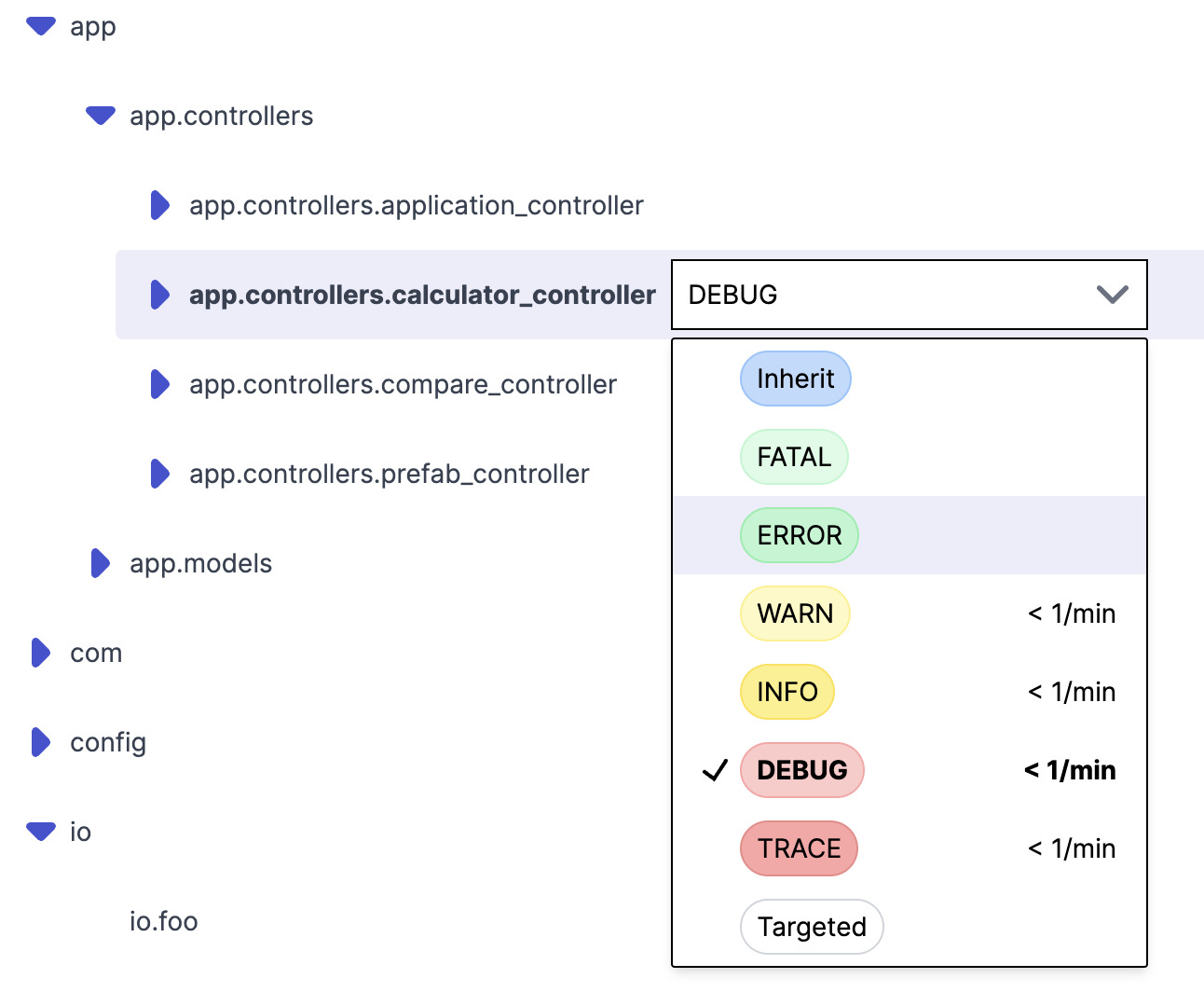
Of course the real reason to do this is to make it easier to search and analyze your logs. So I'll deploy and then change the log level for our controller to debug to make sure we see our output.
Now we can see how nicely these show up in Datadog:

Structured logging is great, and you're just a few minutes away from having it in your app. Learn more about dynamic logging. Happy logging!
Want to try it?
Quonfig stores your config in git. Feature flags, dynamic config, log levels, and secrets — all as files you own.